
Sourcing cosmetics from China can give an overseas brand access to a wide manufacturing base, but the project only works when supplier verification, product specifications, quality control and logistics are planned together. A low quotation without a traceable product file is not a low-risk purchase.
Use a documented sourcing process: verify the manufacturer, define the SKU, approve samples, confirm market responsibilities, agree inspection and packing requirements, and compare landed cost rather than ex-works price alone.
Verify the factory behind the quotation
Check the legal entity, factory address, business scope and production licence. Ask whether the sales contact works for the manufacturer or a trading intermediary. If multiple sites are involved, identify which site compounds, fills and packs the product.
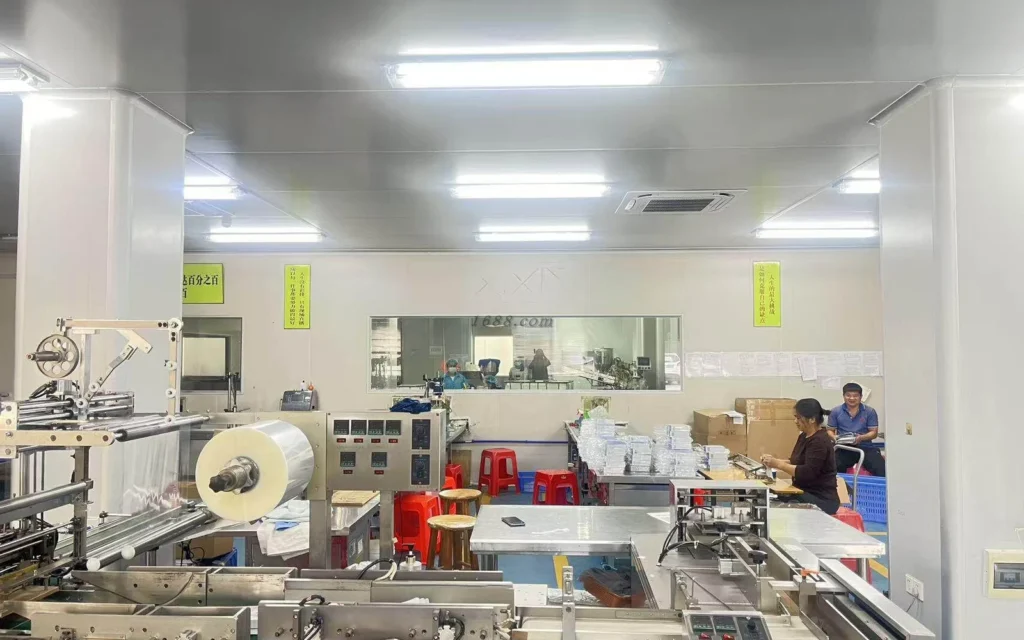
Request a video or in-person tour covering receiving, material storage, compounding, filling, packing and finished-product storage. Cross-check the site name against the licence, certificates and shipping documents. A catalogue alone cannot verify manufacturing scope.
Match the supplier to the product category
A skincare factory may not be the right partner for color cosmetics, aerosols, perfume or sunscreen. Ask for examples of the same format and an explanation of the equipment and controls involved. For sun care, confirm that the proposed testing route is handled by an appropriate laboratory.
Do not choose a supplier only because they list many categories. Depth in the selected category is usually more valuable than a long generic product grid.
Control the brief before comparing prices
Define the use, fill, texture, fragrance, color, packaging, claims, destination, quantity and target date. Ask every supplier to quote the same SKU and identify exclusions. If one quote includes a carton, testing or a premium cap and another does not, the unit prices are not comparable.
A written brief also reduces the chance that a salesperson substitutes a different formula or component to hit a target price. Any substitution should be presented as a technical change and approved in writing.
Build a product-specific document matrix
List each destination requirement and assign an owner. Common items include COA, MSDS, product specification, stability and compatibility reports, microbiological results, safety information and label input. The brand or importer may need additional registration, notification, safety assessment or market-specific authorization.
Ask for a sample of each document before the purchase order. Review the actual formula, product name, version and site. A generic certificate pack may look complete but fail when an importer asks for a product-specific record.
Approve samples and lock the specification
Approve the formula, appearance, odor, texture, fill, pack function and label together. Record the sample date and version. If a second round is needed, list the changes and repeat the affected tests.
Use the approved specification in the purchase order and inspection plan. Confirm how the factory will compare bulk production with the approved sample and what happens if a deviation is found.
Plan quality inspection
Agree the inspection stages, sampling plan, acceptance criteria and who attends. Check raw-material release, bulk checks, fill weight, seal integrity, label placement, carton count and finished appearance. For higher-risk products, consider a third-party inspection.
The inspection should produce a report with defects, quantities and disposition. A final photograph is not a substitute for measurements and a signed release.
Protect formulas, artwork and customer information
Sign a confidentiality agreement before sharing detailed formulas, customer lists, artwork or launch plans. Limit access to the minimum information needed for quotation and production. Keep artwork files and brand assets in a controlled folder.
Confirm in the contract who owns the formula, artwork, tooling and approved materials. Exclusivity and reuse must be written down; an informal assurance is difficult to enforce.
Compare logistics and Incoterms
Ask whether the quotation is EXW, FOB, CIF, DAP or another term. Confirm who books freight, who insures the cargo, who clears export and import, and where risk transfers. Include carton dimensions, gross weight, pallet count and any dangerous-goods or transport restrictions.
Calculate landed cost with freight, insurance, duties, taxes, broker fees and local delivery. Cosmetic products may also require destination-specific labeling or import documentation before release.
Use a staged payment and release plan
Agree deposits, milestone payments, balance release and documents against the contract and production plan. Do not pay the full balance before the agreed inspection and document review. Confirm the bank account belongs to the contracting entity and follow anti-fraud verification.
Keep the purchase order, approved sample record, inspection report, shipping documents and final label together. These records are needed for customs, distributor questions and future repeat orders.
A practical first-order sequence
- Verify the legal entity and site.
- Sign an NDA and issue the same brief to shortlisted suppliers.
- Compare technical feasibility, MOQ and landed-cost basis.
- Approve samples and market documentation plan.
- Lock the purchase order and inspection criteria.
- Approve bulk release and shipping documents.
- Review the first shipment before scaling the range.
Use a supplier scorecard and evidence folder
Score each factory on legal identity, product-category experience, quality system, testing support, communication, capacity, MOQ fit and commercial transparency. Attach the evidence behind the score: licence, certificate scope, audit notes, sample review and quotation comparison.
Keep one folder per project with the NDA, brief, supplier quotes, sample approvals, purchase order, inspection report, shipping documents and final label. This makes a repeat order or a due-diligence request much easier to handle.
Plan communication across time zones
Agree on a written update cadence and a single decision owner on each side. Use dated documents for specifications and approvals. A quick chat can clarify a point, but the final formula, pack, quantity and label should be confirmed in writing.
If a problem occurs, ask for the facts first: affected lot, quantity, test result, proposed disposition and corrective action. A clear issue record is more useful than a promise that “it will be fine.”
Protect the launch after arrival
Inspect the shipment against the purchase order and approved sample. Check quantity, labels, batch codes, cartons, leakage and storage conditions. Report any discrepancy promptly and keep photographs and receiving records. The supplier relationship should include a defined complaint route and a process for replacement or credit where the contract provides it.
Plan the first shipment as a validation step
Do not scale the relationship solely on a successful sample. Review the first production release, documentation, packing, transit condition and receiving inspection. Ask the factory for a short corrective-action response if a discrepancy appears. A documented response is more useful than an informal assurance that the next order will be better.
Set a supplier review after the shipment. Consider communication, accuracy, quality, document completeness and landed cost. Use that review to decide whether to repeat the same SKU, expand the line or change suppliers. A low price cannot compensate for a product that cannot be released or supported in the destination market.
Define an exit and repeat-order plan
Before the first order, agree what happens if the product fails inspection, the component changes or the launch is delayed. A clear remedy and communication route is part of supplier selection. For a repeat order, use the approved specification and compare the new batch with the reference. Do not let a change in raw material, component or site become invisible because the product still has the same name.
Frequently asked questions
How do I verify a cosmetics factory in China?
Match the legal entity, site address, production licence, certificate scope and shipping documents. Ask for a site tour, product-specific records and evidence of the actual manufacturing operations, not only a sales catalogue.
Can I buy cosmetics from China with my own formula?
Yes, subject to formula review, compatibility, market requirements and the manufacturer’s project minimum. At Sandio, OEM and ODM projects start at 1,000 pcs per SKU.
What documents should I request?
Request the exact documents required by the product and destination, such as COA, MSDS, specification, stability and compatibility reports, test reports and labeling input. Assign responsibility for registration, notification and safety review.
Which Incoterm is best?
There is no universal best term. It depends on freight experience, risk tolerance and who can arrange customs and delivery. Compare the total landed cost and responsibility for each option.
Should I use a third-party inspection?
Consider it for a new factory or a higher-value order. Agree the inspection standard, sampling plan and release authority before production.
Official references
- ISO 22716:2007 — Cosmetics Good Manufacturing Practices
- U.S. FDA — Cosmetics laws and regulations
- EU — Regulation (EC) No 1223/2009 on cosmetic products
Turn the guide into a production brief.
Review the commercial scope, then confirm formula, packaging, market and quantity with the team.
Plan a focused OEM or ODM launch.
Sandio Cosmetics reviews the formula direction, packaging, destination market and order quantity before quotation. OEM and ODM projects start at 1,000 pcs per SKU.