
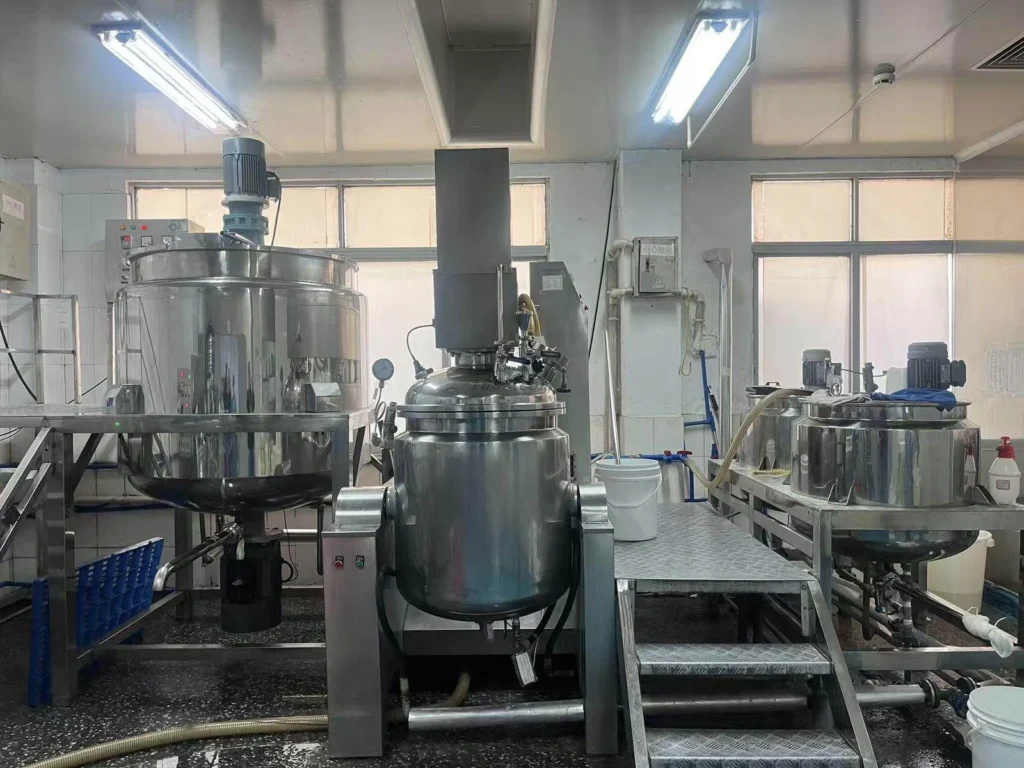
Choosing a cosmetic manufacturer is a supplier-risk decision, not only a price comparison. A useful audit confirms what the factory actually makes, how it controls quality, what records it can provide and whether its communication and commercial terms fit your project.
Use the same 15 questions with every candidate and score the answers against evidence. A polished catalogue can show product ideas, but it cannot replace a site audit, product-specific documents and a clear sample process.
Audit the legal entity and manufacturing site
Ask for the legal company name, unified credit code or registration number, factory address and the relationship between the sales entity and the production site. Verify the name on the manufacturing license and certificates against the quotation and shipping documents.
If a trading company is involved, clarify which operations are performed in-house and which are subcontracted. A supplier may legitimately coordinate components or testing, but the buyer should know who controls compounding, filling, packing and release.
Verify the manufacturing licence and scope
Check the licence holder, product scope, address and validity date. A cosmetics production licence is not the same as a product registration, a GMP certificate or a market-specific conformity document. Ask which document applies to your product and site.
Record the licence number in the supplier file and set a review date before expiry. Sandio’s quality page lists the cosmetics production licence and current GMP documents for buyers to verify.
Confirm what is made in-house
Walk the process map from raw-material receiving through weighing, compounding, filling, sealing, labeling, packing and release. Ask where each step occurs and how a batch travels between areas. If a step is outsourced, identify the supplier and approval process.
A factory that can describe its process in physical detail is easier to audit than one that answers only with broad claims about capacity and experience.
Review quality controls at each stage
Ask about incoming material inspection, identity and specification checks, bulk testing, in-process checks, fill and seal checks, finished-product inspection and retained samples. Confirm how nonconforming material is segregated and how deviations are approved.
Request examples of batch records, specification sheets and corrective-action forms with confidential information removed. The purpose is to understand the system, not to collect a generic certificate pack.
Verify GMP evidence and its scope
Check the certificate number, site name, issuing body, product or process scope, validity and surveillance arrangements. An ISO 22716 certificate supports a quality-system review, but it does not prove that every product is compliant in every market.
Ask how internal audits, supplier approval, training, pest control, cleaning, calibration and change control are managed. Look for a corrective-action process rather than a claim that no problems occur.
Ask how formulas are developed and protected
Clarify the formula-development process, sample rounds, technical review, stability planning and ownership terms. Ask who can access the formula and how confidentiality is maintained. If exclusivity matters, put it in the contract rather than relying on an informal promise.
Request a mutual NDA before sharing detailed formula or customer information. At the same time, give the factory enough information to assess feasibility; an NDA is not a substitute for a clear brief.
Test the sample process
A good sample process starts with an approved brief and a defined reference. Ask what each sample version is intended to test, how comments are consolidated and which decisions must be recorded. Confirm whether the sample and bulk formula will use the same specification.
Review appearance, odor, texture, application, pack function, label fit and any relevant test results. “Looks good” is not a complete approval. The approved sample should be stored or documented as the production reference.
Check packaging and filling capability
Different components require different filling and handling methods. Ask whether the factory has experience with your proposed jar, tube, pump, dropper, spray or airless system. Confirm compatibility testing, fill control, closure torque and line changeover.
If a custom component is proposed, check its minimum, tooling, lead time and backup plan. Do not approve final artwork before the component and formula have been assessed together.
Compare minimums and quotation basis
Ask for MOQ by formula, pack and decoration. Sandio starts OEM and ODM projects at 1,000 pcs per SKU, with final feasibility confirmed after review. A single low number without component and testing assumptions is not comparable.
Request a quote with fill, component, decoration, testing, documents, packing, Incoterm, lead time and payment terms. Separate one-time development and setup charges from recurring production costs.
Review market-support responsibilities
List the destination markets and ask who prepares each required file. Common topics include COA, MSDS, ingredient or safety information, stability and compatibility reports, labeling input and product-specific test reports. The factory may support these, while the brand or importer remains responsible for some market obligations.
Do not accept a generic statement that “all certificates are available.” Ask for the exact file list tied to the formula, pack and destination.
Check capacity and scheduling realism
Ask how the factory plans materials, components, production slots and inspection. Confirm the difference between a requested ship date and a confirmed production date. A credible plan identifies dependencies such as artwork approval, component delivery and test turnaround.
For a repeat order, ask how the schedule accounts for existing customers and how formula or pack changes are controlled.
Evaluate the communication trail
Test the quality of the first technical response. Does the team restate the brief, separate confirmed facts from assumptions and identify missing inputs? Are decisions recorded in writing? Is there a named project contact?
Fast replies are helpful, but a clear reply is more valuable. Cross-time-zone communication should include versioned documents and a defined approval route.
Inspect storage and traceability
Ask how raw materials, components, bulk and finished goods are labeled and stored. Check temperature or humidity controls where relevant, segregation of approved and rejected material, and traceability from a finished lot back to filling and compounding records.
Confirm how retained samples and distribution records are handled so a complaint can be investigated later.
Review corrective action and change control
Ask what happens when a test is out of specification, a component changes, a label is revised or a complaint is received. A mature system records the issue, assesses impact, assigns an action and verifies effectiveness.
Do not wait for a problem to ask this question. The response reveals whether the factory has a repeatable quality culture or only a sales presentation.
Use a scored audit and a paid sample
Score each supplier on evidence, not impressions. A simple scale from one to five across scope, quality, documentation, communication, capacity and commercial fit makes the trade-offs visible.
Then run a sample project with the strongest candidates. Review the technical comments, pack compatibility and documentation as seriously as the sample appearance. If the first project is unclear, a lower unit price is not enough to justify the risk.
Score the evidence, not the sales deck
Create a simple audit score for each candidate: legal and licence scope, manufacturing capability, quality system, product-specific testing, document support, communication, capacity and commercial fit. Attach the evidence to each score. A high score with no verified documents is not a high-confidence supplier.
Use a paid sample or pilot project to test how the factory handles questions, revisions and records. The sample experience is part of the audit. If a simple brief produces confused feedback or undocumented changes, the bulk project is unlikely to become clearer.
Frequently asked questions
What is the first thing to verify?
Verify the legal entity, manufacturing site and licence scope. The name and address on the quotation, licence, certificate and shipping documents should align.
Is an ISO certificate enough?
No. Check the scope, site, validity and issuing body, then review batch records and product-specific testing. A certificate supports supplier evaluation but does not replace it.
Should I audit the factory in person?
An in-person or remote audit is valuable for a significant project. At minimum, review site evidence, process records and a sample run, and clarify whether a third-party audit is available.
How do I compare MOQs?
Compare formula, component, decoration and testing minimums on the same SKU. Sandio’s OEM and ODM baseline is 1,000 pcs per SKU, with feasibility confirmed for the selected project.
What should be in a manufacturing agreement?
At minimum, scope, formula ownership and confidentiality, specifications, approvals, quantity, price basis, quality standards, change control, delivery terms and remedies.
Official references
- ISO 22716:2007 — Cosmetics Good Manufacturing Practices
- U.S. FDA — Cosmetic Good Manufacturing Practices
- EU — Regulation (EC) No 1223/2009 on cosmetic products
Turn the guide into a production brief.
Review the commercial scope, then confirm formula, packaging, market and quantity with the team.
Plan a focused OEM or ODM launch.
Sandio Cosmetics reviews the formula direction, packaging, destination market and order quantity before quotation. OEM and ODM projects start at 1,000 pcs per SKU.