
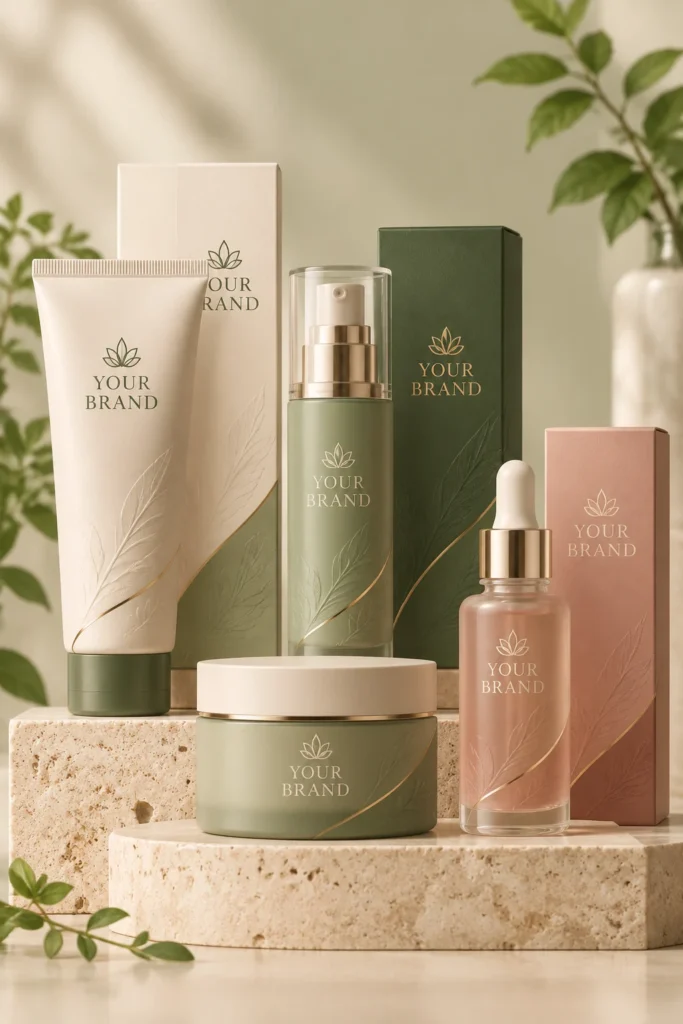
A good cosmetic formulation brief helps a manufacturer quote accurately because it turns a vague product idea into a defined project. It should explain the intended customer, use, sensory target, ingredient boundaries, package, market, claims and order quantity. The brief does not need to be a finished formula, but it must make the unknowns visible.
Most slow quotations are not caused by the factory refusing to work. They happen because the brief mixes several product ideas, omits the market or asks for a price before the pack and fill are defined. A one-page working document is often more useful than a long mood board without priorities.
Start with the product job, not the ingredient list
Describe what the product should do in the user’s routine and how it will be used. A leave-on facial moisturizer, rinse-off cleanser, scalp treatment and massage oil require different technical and regulatory reviews. State the application area, frequency, expected skin or hair feel and whether the product is intended for professional or consumer use.
Then identify the product category and generic comparison. “A lightweight gel-cream for a humid climate” gives the laboratory more direction than “a serum with a trendy active.” A reference product can be useful if you explain what you like about it: speed of absorption, slip, finish, scent intensity or package function.
Do not include a competitor’s full ingredient list and call it your formula. The manufacturer still needs to know the intended role of each ingredient and whether the copy is a starting reference or a strict technical requirement.
Describe texture, appearance and sensory targets
Texture words mean different things to different people. Define the preferred flow, thickness, gloss, tack, cushion, residue and after-feel. For a cream, say whether it should be rich or light, matte or dewy, fast-rubbing or slow-melting. For a cleanser, describe foam, slip and rinse. For a hair product, describe wet combing, dry feel and hold without making unverified performance claims.
Fragrance and color should also be specific. State whether the product should be fragrance-free, lightly scented or matched to a reference, and whether the color must remain stable in the chosen pack. Include any known allergen or ingredient exclusions.
Define ingredient boundaries and the evidence you need
List ingredients that must be included, ingredients that must be avoided and ingredients that require discussion. If you want a particular active, state the desired role and any known concentration range, but allow the manufacturer to confirm compatibility, stability and claim support.
Ask what documentation is available for the selected raw materials: specification, safety data sheet, allergen information and country-of-origin support where needed. Do not assume that an ingredient name alone proves purity, performance or market acceptance.
Keep marketing ingredients separate from the technical formula. A label may call out a hero ingredient, but the safety and stability assessment must cover the complete finished formula.
Specify the pack and fill
The primary pack can change texture, preservation, compatibility and user experience. State the proposed component type, fill size, material preference, closure and decoration direction. If the pack is not yet chosen, ask for a shortlist that is technically suitable and commercially available at the project quantity.
Confirm whether the formula will be tested in the actual pack, whether a secondary carton is required and whether the label needs a special varnish, foil or curved-surface adaptation. Include the target fill in grams or millilitres and the required net-content statement.
Name the destination market and sales channel
A U.S. cosmetic, EU cosmetic and sunscreen drug can follow different requirements. The brief should state every market where the product may be sold, even if the first launch is domestic. The manufacturer can then flag testing, documentation or labeling questions early.
Channel matters too. A marketplace listing may require specific images, warnings or product information; a salon range may need professional sizes; a hotel amenity may need individual wrapping and dispensing. Do not assume that one label and pack will work everywhere.
Separate desired claims from approved claims
Write the claims you would like to make in one column and the evidence currently available in another. A brief that asks for “clinically proven anti-aging” without a study plan creates a false expectation. The manufacturer can help identify testing needs, but it should not invent evidence.
Label and marketing claims must remain consistent. If a claim cannot be supported for the target market, remove it before final artwork rather than adding a disclaimer after production.
Give a realistic quantity and timing range
State the target quantity per SKU, the number of SKUs and the required delivery window. At Sandio, OEM and ODM projects start at 1,000 pcs per SKU; final feasibility depends on formula, packaging and market scope.
A timing range helps the team plan sampling, component lead time and artwork approval. Avoid asking for a final production date before the pack and formula are approved. A credible schedule identifies dependencies rather than only a promised ship date.
Use a brief template the factory can answer line by line
| Brief field | What to write | Example format |
|---|---|---|
| Product and use | Category, area, frequency and rinse-off status | Leave-on facial gel-cream, daily consumer use |
| Target customer | Skin type, market and channel | Humid-climate e-commerce customer |
| Sensory target | Texture, finish, scent and color | Light gel-cream; low fragrance; translucent |
| Formula boundaries | Required, excluded and optional ingredients | No added fragrance; discuss active system |
| Pack and fill | Component, material, closure and volume | Airless pump, 50 ml, low-profile cap |
| Market | Destination and claims | U.S. and EU review before launch |
| Testing | Known requirements and unknowns | Stability, compatibility, safety support |
| Commercial | SKU count, quantity and timing | 2 SKUs, 1,000 pcs each, target month |
Review the feasibility response before the quote
A useful manufacturer response should restate the brief, identify missing information, propose a formula route, flag pack or claim risks and state the sample plan. It should distinguish confirmed facts from assumptions.
Ask for the quotation on the same basis if you compare several suppliers. Record which items are included, which are excluded and what could change the price. If the response is only a number and a catalogue, the technical scope is not yet clear enough to evaluate.
Control revisions so the brief stays usable
Give each version a date and a clear change log. When the fragrance, fill, pack or market changes, update the brief and ask the factory which tests or approvals must be repeated. This prevents a production file from containing a mix of old and new requirements.
The final approved brief and specification should sit alongside the sample record, artwork and test reports. That package becomes the reference for the purchase order, inspection and future repeat production.
Make the brief easy to compare
Use the same template for every supplier and keep the project references in a versioned folder. When a quotation returns, compare the assumptions rather than only the price: formula route, pack, fill, sample rounds, testing, lead time and exclusions. A brief that is clear enough to compare is already doing commercial work.
If the project is confidential, share a sanitized version for the first feasibility review and put the detailed formula or pack files behind an NDA. The factory still needs enough information to identify technical risk; hiding the intended use or market only produces a less useful response.
Frequently asked questions
How long should a formulation brief be?
One to three pages is often enough to begin. The important fields are product use, sensory target, formula boundaries, pack, market, claims, quantity and timing, not literary length.
Can I send only a reference product?
A reference can help, but explain which attributes matter and which should not be copied. Do not assume the factory can reverse-engineer or legally reproduce another brand’s formula.
Should I specify every ingredient?
Specify required, excluded and sensitive ingredients, then let the technical team propose the full system. A complete formula may be appropriate for an OEM project, but it still needs feasibility, safety and compatibility review.
When should packaging be included?
Include it before the formula is locked where possible. The actual component may affect compatibility, filling, preservation and testing.
What if the market is not final?
State all possible markets and ask for a staged review. Do not place an unverified claim or use a label pack that only fits one market while planning to ship everywhere.
Official references
- ISO 22716:2007 — Cosmetics Good Manufacturing Practices
- EU — Regulation (EC) No 1223/2009 on cosmetic products
- U.S. FDA — Cosmetics laws and regulations
Turn the guide into a production brief.
Review the commercial scope, then confirm formula, packaging, market and quantity with the team.
Plan a focused OEM or ODM launch.
Sandio Cosmetics reviews the formula direction, packaging, destination market and order quantity before quotation. OEM and ODM projects start at 1,000 pcs per SKU.