
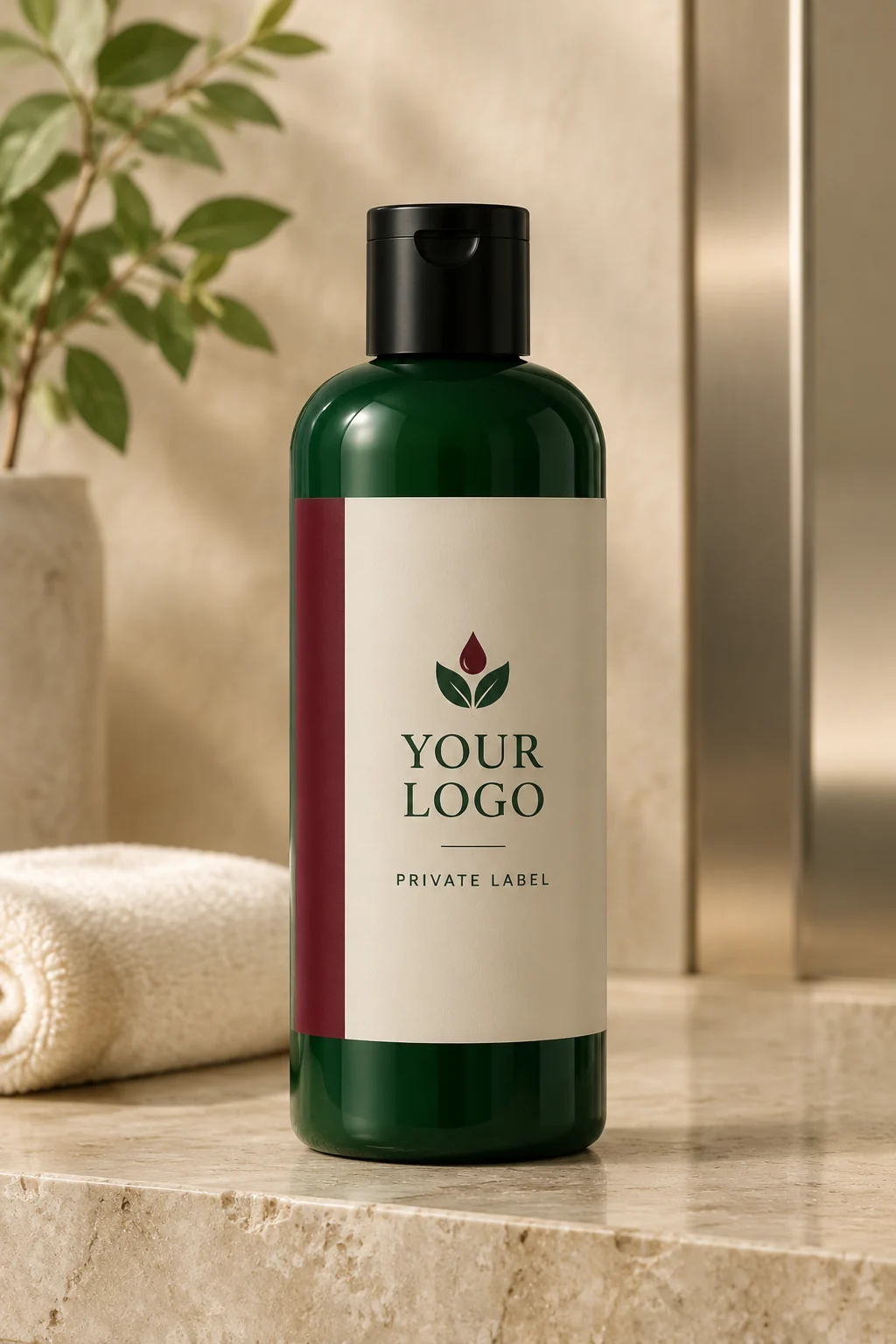
Private label conditioner is a rinse-off product that smooths, detangles and softens hair after shampoo. Sandio Cosmetics develops weight, slip and scent to pair with your shampoo.
Development directions for private label conditioner.
These are project directions, not fixed recipes. The final formula is planned around your target market, pack and quantity.
Daily conditioner
A balanced rinse-off conditioner for regular use.
Rich conditioner
A more substantial conditioning feel for dry-feeling hair.
Lightweight conditioner
A lower-residue direction for fine hair or frequent washing.
Silicone-free
A formula direction without silicones, supported by the actual system.
Fragrance-led
A conditioner built around a signature scent.
Professional size
A larger salon or refill format.
Private Label Conditioner: product snapshot
Typical starting points for the product brief. Final specifications are confirmed after formula, component and market review.
| Types | Daily, moisturizing, lightweight, curl, color care |
|---|---|
| Ingredients | Cationic conditioners, oils, proteins |
| Typical fills | 250 / 300 / 500 ml |
| Packaging | Bottle, tube, pump |
| Pairing | Matched to shampoo |
| Key risk | Heavy feel for fine hair |
Which conditioner format fits your brand?
Compare the commercial route before the sample brief is fixed. Availability is confirmed for the selected formula and component.
| Option | Best for | Watch out for |
|---|---|---|
| Daily conditioner | All hair types | Weight |
| Moisturizing conditioner | Dry and damaged hair | Can be heavy on fine hair |
| Lightweight conditioner | Fine hair | Less detangling |
| Curl conditioner | Curly and coily hair | Rich textures |
Formulation notes for conditioner
- Behentrimonium-type conditioners give strong detangling.
- Light versions avoid heavy oils.
- Silicone-free versions use plant oils.
What drives the cost of conditioner
- Conditioner level
- Oils
- Pack
What to prepare before starting a private label conditioner project.
Define the wet and dry feel
Conditioner performance is experienced during rinsing and after drying. The brief should describe both stages.
Plan the rinse-off route
Water-based conditioners need preservation and stability review, and the label should state the rinse-off use.
Test fragrance and viscosity
Scent and thickness can change in the final base. Evaluate them in the selected pack before artwork.
Avoid unsupported repair claims
Softness and manageability are cosmetic outcomes. Structural repair or medical claims need appropriate evidence and market review.
Tests and checks we plan for conditioner
- Detangling test
- Viscosity
- Stability
Common sourcing mistakes with conditioner
- Too heavy
- No silicone-free option
- Scent mismatch with shampoo
Market and labeling notes
- Same labeling as shampoo.
- Silicone restrictions apply in some markets.
Example project brief for conditioner
Illustrative example, not a real client. Client names, briefs and project details are confidential and are never disclosed without written permission.
- Market: US
- Product: silicone-free conditioner, 300 ml
- Must-haves: matches existing shampoo scent
- Quantity: 3,000 pcs
How a project works with Sandio Cosmetics
Send your brief → we review the formula route and quote → sample and refine → approve the specification → produce and pack. Choose OEM if you already have a formula or standard, or ODM if you want us to develop it.
For OEM/ODM projects, Sandio can provide testing reports aligned with the agreed destination-market requirements and assist the customer with the relevant product certification or supporting-document process. The exact tests, responsible party, laboratory route and certificate scope are confirmed per project.
Confidentiality: NDA terms can be agreed before the brief is exchanged. Client names, briefs, artwork and project details are not disclosed or used publicly without written permission.
See the full OEM/ODM process · Packaging & design · Quality & documents
Private Label Conditioner: buyer FAQ
Product-specific starting points for the first brief. Final answers depend on the selected formula, pack and destination market.
Can conditioner be silicone-free?
Yes, using plant oils and alternative conditioning agents.
Can you make a curl conditioner?
Yes, with richer conditioning agents and oils for curly hair.
Can it match my existing shampoo?
Yes, we match scent and design to your shampoo.
What size is standard?
250 to 300 ml retail; 1 L for salons.
What sizes are common for conditioner?
Common fills are 250 / 300 / 500 ml. The final size is agreed together with packaging and your target retail price.
Which packaging works for conditioner?
Typical options are bottle, tube, pump. Formula and component are tested together before artwork is approved.
Continue within the same manufacturing cluster.
Compare other hair & scalp care project pages before you send the brief.
Tell us what you want to make.
Share your product idea, target quantity and market. Frank Feng will review your brief and reply within 24 hours, Beijing time, Monday to Saturday.
- Private label MOQ: 500 pcs
- Custom formula MOQ: 3,000 pcs
- Factory in Baiyun District, Guangzhou