
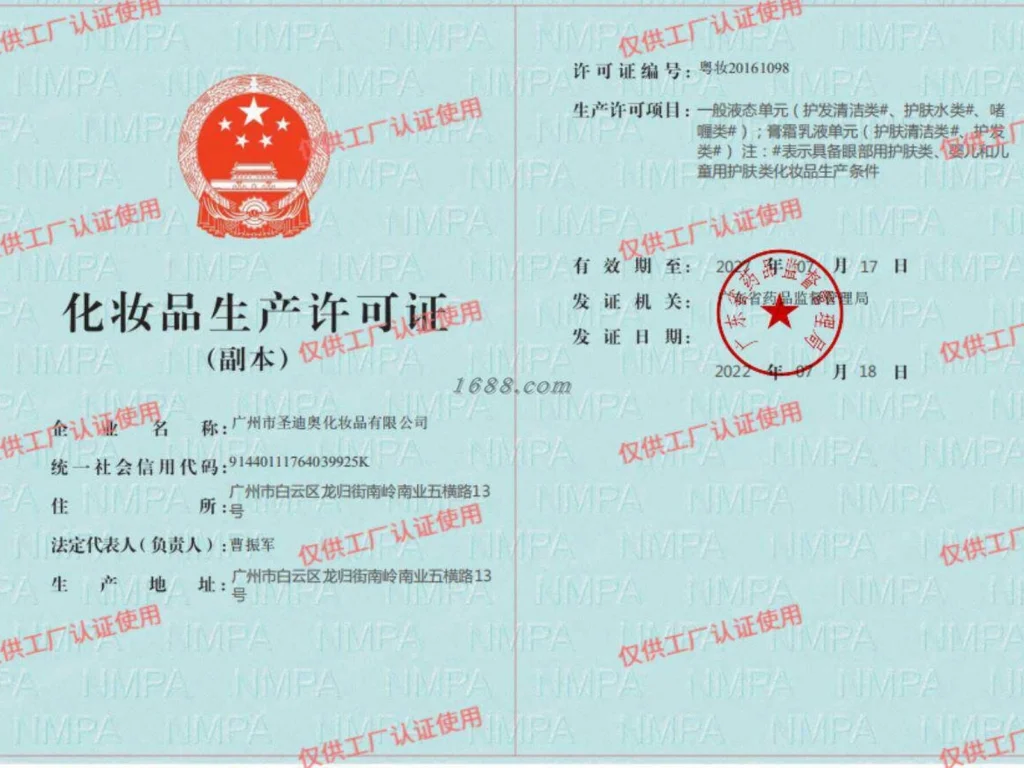
A document list is not a certificate collection. The useful question is which document applies to your exact formula, packaging, intended use and destination market.
Cosmetic buyers often ask for COA, MSDS and IFRA documents in the first supplier conversation. These files serve different purposes. Requesting all of them without understanding the product can create confusion, while treating a generic certificate set as product-specific evidence can create compliance risk.
Start with the intended use and market
The required file set follows the product. A massage oil for skin contact, a diffuser blend, a body lotion and a face cream do not raise the same questions. The destination market and sales channel also matter.
Write the intended use, target country, product category, fill size and whether the buyer will import as a brand owner or distributor. Then ask the manufacturer to map the available documents to that specific brief.
What is a COA?
A Certificate of Analysis normally reports the results of specified tests or measurements for a material or batch. It should identify what was tested, the specification or method referenced and the result.
Ask whether the COA relates to the raw material, the finished product or a specific production batch. A raw material COA is not the same as a finished-product release document.
What is an MSDS?
A Material Safety Data Sheet provides information about hazards, handling, storage, transport and emergency response. The document should match the actual product and its intended use.
Do not assume that a generic oil MSDS covers a finished massage oil with a carrier base and fragrance. Ask for the correct document for the final product.
What is IFRA documentation?
IFRA standards relate to fragrance ingredients and their use. IFRA documentation may be relevant when a fragrance compound is used in a product. The International Fragrance Association publishes standards and guidance.
Ask what IFRA document applies to the fragrance and product category. A fragrance supplier certificate is not automatically a finished-product compliance conclusion for every market.
What else may buyers request?
| Document or topic | What it can clarify |
|---|---|
| Product specification | Appearance, odor, pH or other agreed parameters for the finished product |
| Batch record | Production and material traceability for a specific batch |
| Stability information | How the formula and package were assessed over time |
| Microbiological test report | Results for the tested product and batch, where applicable |
| Heavy metal or restricted substance test | Results against the stated method or limit |
| Label artwork approval | Confirmed label copy, dimensions and version |
| Packing list and commercial invoice | Shipment contents and commercial terms |
Regulatory information is destination-specific
The manufacturer can provide information available for the product, but the brand owner and importer still need to confirm the regulatory path for their market. For U.S. cosmetics, the FDA publishes information on facility registration and product listing under MoCRA: FDA cosmetic registration and listing. For the EU, the European Commission provides information on the Cosmetic Product Notification Portal: EU CPNP.
Regulatory roles should be clear before artwork and shipment. Ask who is responsible for notification, responsible-person details, labeling review and any market-specific dossier.
Questions to ask a manufacturer
- Which documents are available for this exact formula and package?
- Are the documents tied to a material, a batch or the finished product?
- Which document versions will be provided before production, and which are issued after production?
- What information does the manufacturer need from the brand owner?
- Which regulatory steps remain the buyer’s responsibility?
Common mistakes
- Accepting a generic certificate pack without checking the product name and date.
- Assuming a raw material document covers the finished product.
- Requesting IFRA files without identifying the fragrance and product category.
- Treating a test report as approval for every market.
- Leaving documentation until after labels have been printed.
At Sandio Cosmetics, document requirements are reviewed formula by formula. The site does not display unverified certification logos or promise a certificate before the selected formula and destination have been reviewed.
Frequently asked questions
Is a COA the same as a certificate of compliance?
No. A Certificate of Analysis reports specified test or measurement results. A certificate of compliance is a different type of document and should be identified clearly.
Do I need an MSDS for every cosmetic product?
Requirements vary by product, use, destination and transport method. Ask the manufacturer and your freight or regulatory adviser to confirm what is needed for your shipment.
Does IFRA certification apply to every essential oil?
IFRA documentation relates to fragrance ingredients and their use. Applicability depends on the fragrance and product category, so the specific file should be confirmed.
Can a manufacturer guarantee my product complies in the EU or U.S.?
A manufacturer can provide formula and production information, but the regulatory path depends on the product, claims, labeling and responsible entities. Responsibilities should be confirmed in writing.
When should I request documents?
Request the document list before sampling is finalized and confirm the final file set before bulk production and shipment.
Need a manufacturing partner?
Sandio Cosmetics focuses on essential oils, body care and face care. Private label starts at 500 pcs; custom formula development starts at 3,000 pcs.